
For many owners, the most confusing part of getting out of a timeshare isn’t the contract — it’s the real estate underneath it.
That’s the part the salespeople rarely explain, and it’s exactly why so many owners find that getting out of their timeshare “impossible.”
Here’s the truth:
The legal structures behind timeshares are intentionally complex, but with the right professional support, exiting a timeshare is not only possible — it’s often far less painful than people expect.
Let’s break down what a timeshare exit really is, how it works, and why understanding the “real estate piece” matters more than most owners realize.
The Hidden Complication: Timeshares Aren’t Just Vacations — They’re Real Estate
Whether you bought a deeded week or a right-to-use membership, your timeshare carries a real estate component that permanently connects you to the resort.
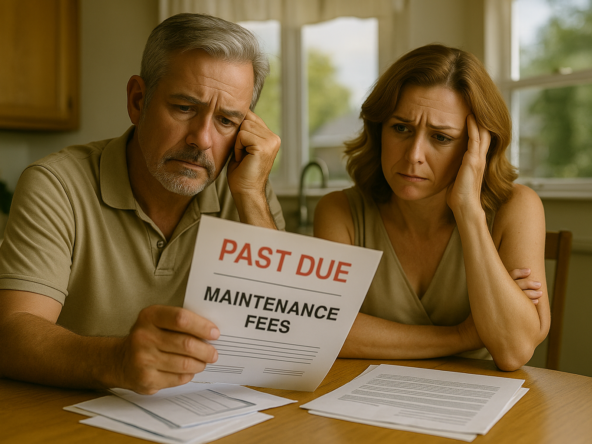
That’s why maintenance fees never stop.
That’s why you’re legally responsible to pay those maintenance fees even if you stop using it. That’s why timeshare companies can charge you a special assessment and why you’re legally required to pay it. And that’s why “walking away” isn’t as simple as tossing a contract in the trash.
Here’s a quick breakdown of the two main ownership types:
1. Deeded Timeshares
A deeded timeshare is actual real estate — your name is placed on a property deed recorded with the county.
This means:
- You are legally tied to the resort and the property. If it is your property, it is your problem.
- Maintenance fees and special assessments follow you indefinitely and are your legal responsibility.
- The real estate portion of the timeshare (the little deed) does not ever “go away.” It must be returned to the HOA or the trust it came from.
- Note: There are still powerful contracts to contend with! As if the timeshare deed wasn’t difficult enough, there are still long and confusing timeshare contracts which must be contested and effectively cancelled.
2. Right-to-Use (RTU) Timeshares
This is not deeded real estate, but real estate is nevertheless involved. It’s a long-term contract that gives you the “right” to use a resort — but with no ownership stake.
This means:
- You are not on a deed, however per the contract, you still owe yearly fees, even if you don’t use it yourself.
- You are still subject to collection attempts, even if the timeshare company is located out of the country.
- Cancelling requires strong contract law and a contract dispute.
- If your timeshare is fractional, there is real estate involved again, and real estate law is required to get you out.
The Three Main Ways People Try to Exit Their Timeshare

Most owners don’t know their options — and unfortunately, some choose the wrong path to exit their timeshare and end up worse off financially.
Let’s simplify the landscape.
Option 1: Strategic Default (Not Recommended)
This is when an owner stops paying and allows the timeshare to foreclose.
The problems?
- Damages your credit
- Can trigger aggressive collections
- Foreclosure is lengthy and stressful
- Doesn’t always remove liability
Most people think this is their only option — but it rarely produces a clean, safe outcome.
Option 2: Timeshare Transfers (Major Legal Issues)
Some companies try transferring your deed to a third party — often a shell entity or someone with no intention of paying the fees.
This is illegal in about a dozen U.S. states
and even where it’s legal, these transfers often end in:
- Invalid paperwork
- Deeds being rejected by counties or hoa’s
- Resorts suing the original owner
- Owners being pulled back into liability years later
The question is always: Who are they transferring your deed to — and what happens when that person stops paying?
This is why Timeshare Recyclers does not use transfer companies and warns clients away from them.
Option 3: Contract Dispute (The Safe, Legal, Preferred Path)
This is the route Timeshare Recyclers specializes in because it deals directly with:
- The real estate component (deeded)
- The contractual obligations (both RTU and deeded)
- The legal chain of liability
- A legal process the timeshare companies must respect
By contesting the contract itself — not just moving your name to another person — you permanently break the legal link between you and the resort.
This gives you:
- A clean, legal exit
- Protection from future liability and special assessments
- Release from maintenance fees
- No foreclosure, no credit damage
- The benefit of hundreds of years of real estate and contract law on your side.
This is the only approach that addresses both real estate law and contract law, which is why it’s the safest pathway for most owners. How does Timeshare Recyclers accomplish this? By working with a network of attorneys to process your contract dispute.*
Why Professional Help Matters

Timeshare exits ARE NOT DIY projects. Because these contracts involve both real estate law and consumer contract law, a correct exit requires:
- Knowing how to identify ownership type
- Understanding county recording processes
- Evaluating legitimate contract dispute release options
- Preparing legal documentation
- Communicating with developer legal departments
- Ensuring the release is final and irrevocable
Why Timeshare Recyclers Is the Safe Choice

We’ve built our entire process around clarity, safety, and legal precision.
Our team works with attorneys to help with:
- Timeshare contract disputes
- Real estate release strategy
- Communication with developer legal teams
- Document preparation
- County recording
- Final confirmation of release
Put simply:
When you exit a timeshare, it is critical to get out correctly and address both the contract and the real estate component. That’s what we do — and we do it cleanly, legally, and permanently.
Don’t Let Confusing Contracts And Difficult Real Estate Law Hold You Back
You don’t need to navigate this alone. Timeshare Recyclers has well over 20 years of timeshare experience and over 13 years of timeshare exit experience. We are BBB Accredited and proudly maintain an A+ rating. We have helped thousands of families successfully navigate the process of exiting their timeshares and would be honored to help you do the same.
The next step is easy. Simply schedule a presentation with one of our experienced Senior Exit Specialists and we’ll take it from there. 👉 Schedule a free consultation to review your ownership and exit options.
📞 1-888-287-4188
📧 wecare@timesharerecyclers.com
Freedom is possible — with the right plan and the right guide.
*Note: Timeshare Recyclers, LLC is not a law firm. We use our extensive timeshare experience to consult with law firms specializing in contract disputes and legal timeshare exits to get you out of your timeshare.